When we opened the WeShop beta on May 10, both growth and user feedback exceeded what our small team expected. It felt a little like the early mobile-internet years: if the product solved a real problem, users and media would carry part of the distribution for you.
The formal release also made one thing clear: WeShop would be a paid product built around AI compute. That sounds simple, but for an AIGC product it changes almost every product decision, from onboarding to infrastructure.


A lot of AI discussion at the time was philosophical. We were more interested in the practical question: what breaks when you try to turn image-generation technology into a real commercial workflow?
The first problem is product definition before the technology is fully ready
Every AI application faces the same tension. If the technology is already mature, the opportunity may be gone. If the technology is not mature, the product can easily be worse than the old workflow. That is why product judgment becomes even more important in the AI era.
For WeShop, the obvious research direction had always been virtual try-on: give the system a product photo and have it place the product naturally on many different models. Mogujie had explored this since it first had a computer-vision team. My view then was that the technology still did not meet the minimum bar for a B2B workflow, though it could work earlier in some consumer-facing experiments.
A better route is often to combine technical taste with business sense: choose a promising technical direction, then apply it to a business problem you have understood for years.
Once the technical route and interaction are good enough, users become more imaginative than the team. One customer gave us a very concrete lesson.
In the mannequin workflow, merchants often uploaded hollow mannequin photos without heads or limbs. These images are common in the industry, but they are difficult for a model-generation system.
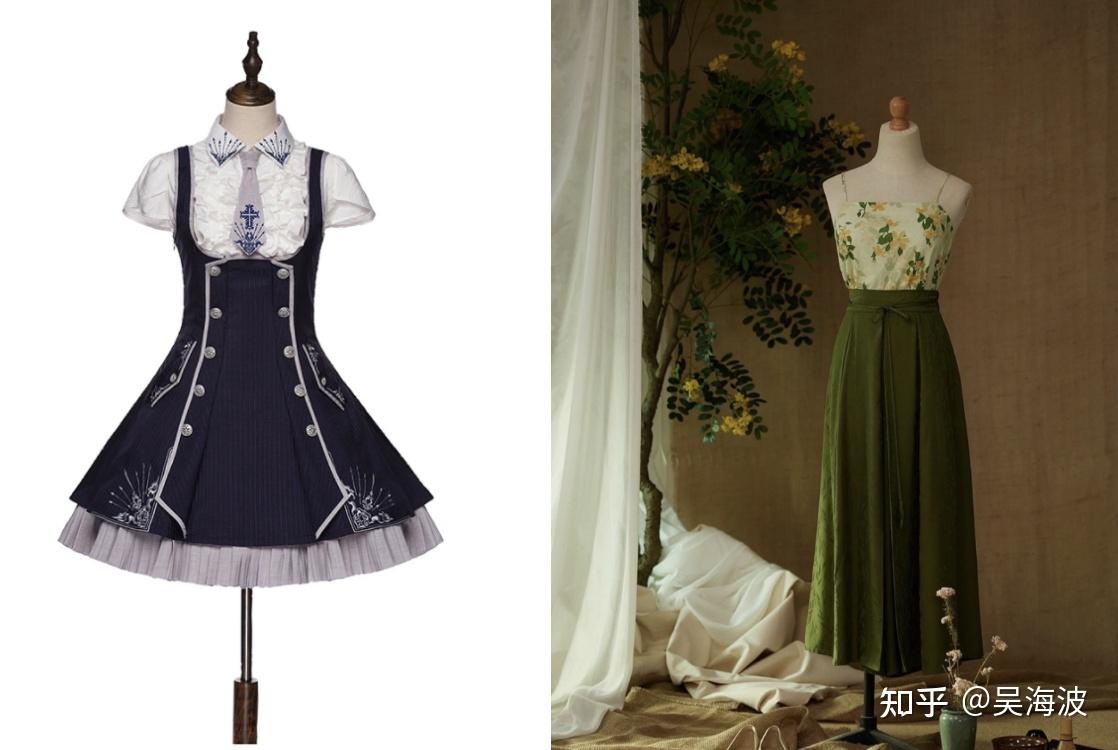
If used directly, the result usually failed in obvious ways.

We spent a lot of time trying to make these inputs produce natural model photos. Then one customer found a workaround: add a few rough strokes before running the generation.
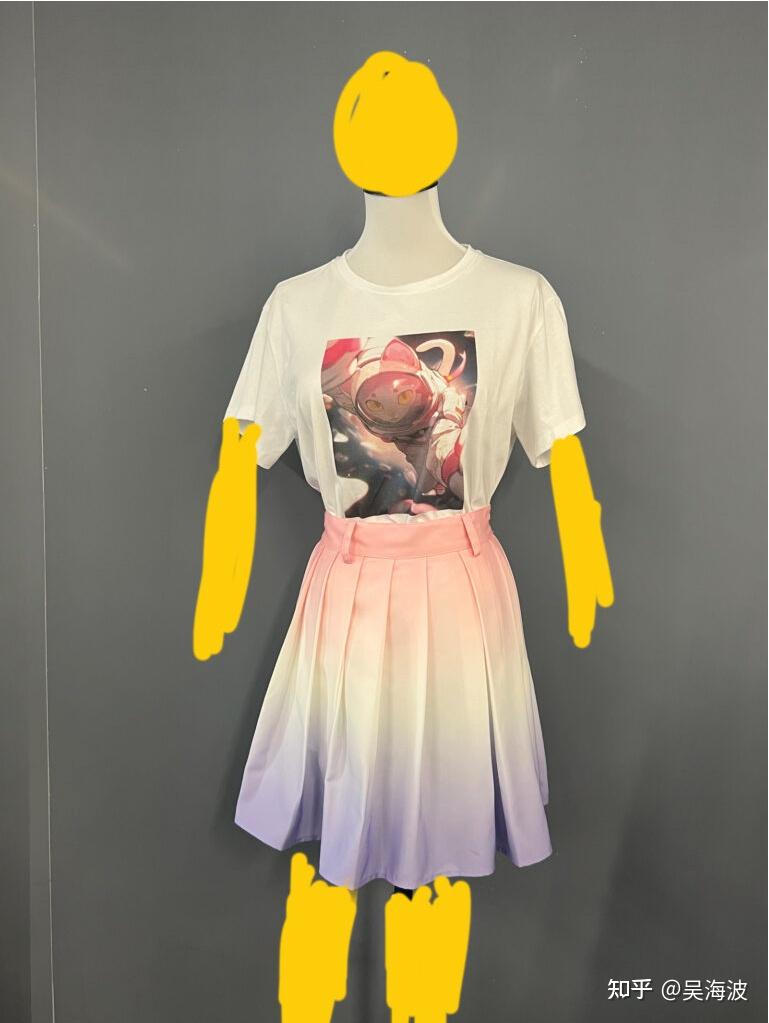
With that hint, the output improved dramatically.

Other customers quickly extended the trick. A product weakness became partly solvable through a workflow pattern we had not designed ourselves.

Compute cost becomes a product constraint
WeShop was the first product in my career where compute cost became a serious concern at such an early user scale. GPUs were expensive, hard to procure, and often needed urgently because growth was difficult to forecast.
- Different customer requests needed different combinations of base models, LoRAs, ControlNets, and traditional CV models. These models are large, GPU utilization is high during each job, and cold-starting them online is too slow for users. We had to pre-configure resource pools, which created waste and occasional queues.
- The output quality required constant parameter tuning and offline training. Because of cost constraints, online and offline workloads had to share infrastructure, and our switching logic was not yet intelligent enough.
- Different GPU types across different data centers made resource management even harder.
For an AIGC business, compute is not a back-office detail. It is part of the life line of the product.
Evaluation is still unsolved
Controlling a diffusion model to commercial quality is hard. In one iteration, the left sleeve edge clearly improved after we trained a more targeted base model.

But we soon found that the model had overfit. In other scenes, the generated image acquired a hazy layer that damaged the texture and commercial quality of the photo.

The same pattern appeared across base models, LoRAs, templates, and parameter choices. Even with strong community developers on the team, there was no obvious best practice for deciding whether a model change was truly better.
That is why real customer demand matters so much. AIGC teams have to improve together with customers inside an uncertain experience space.
Small teams, hard choices
WeShop was an AI product under Mogujie, run by a small, self-driven team distributed across several regions. We were hiring for frontend, backend, and algorithm roles, but we also wanted to stay small.
The frontend challenge was designing interactions around AI. The backend stack was mainly Go and Python, with heavy work around compute management. The algorithm work required familiarity with Stable Diffusion, LLMs, and strong coding ability; traditional CV and NLP backgrounds were useful but not enough by themselves.
Many people reached out about APIs, private deployments, ecosystem integrations, and partnerships. With limited resources, we had to queue many requests and make tradeoffs. The practical lesson was simple: in early AI productization, focus is not a slogan. It is the only way a small team survives.