We are living through a strange historical moment. AI is rewriting the rules at an extraordinary speed: writing, drawing, coding, analyzing. Almost every day it pushes against abilities humans used to be proud of.
That creates anxiety: what should I learn next? What is still mine? Where does my value come from?
But precisely because of that, one thing becomes more important: recording the traces of your own life.
Not because recording is efficient. Not because it helps you build a disciplined persona. Because when more external capabilities are handled by AI, the emotions, moments, confusions, and small tremors that belong only to you become harder to replace.
The problem with diaries is not input
More people are telling others to keep a diary. The advice is not wrong, but the form is heavy. A diary usually means you live through a day, sit down later, recall, filter, organize, and turn it into a coherent paragraph.
That is compression. It preserves the version you have already organized, not life itself.
Real life is often made of fragments: a photo taken without much thought, a sentence you suddenly want to write down, a mood shift you cannot explain, a sadness that arrives late at night.
These fragments look small, but they are often closer to the real you than any polished summary.
Recording used to feel lonely
Most recording products were hard to keep using not because input was too inconvenient, but because nothing happened afterward. You wrote a sentence, took a photo, saved a thought, and then it disappeared into a timeline.
There was no response, no connection, and no sense of being understood. Over time, recording became a lonely act.
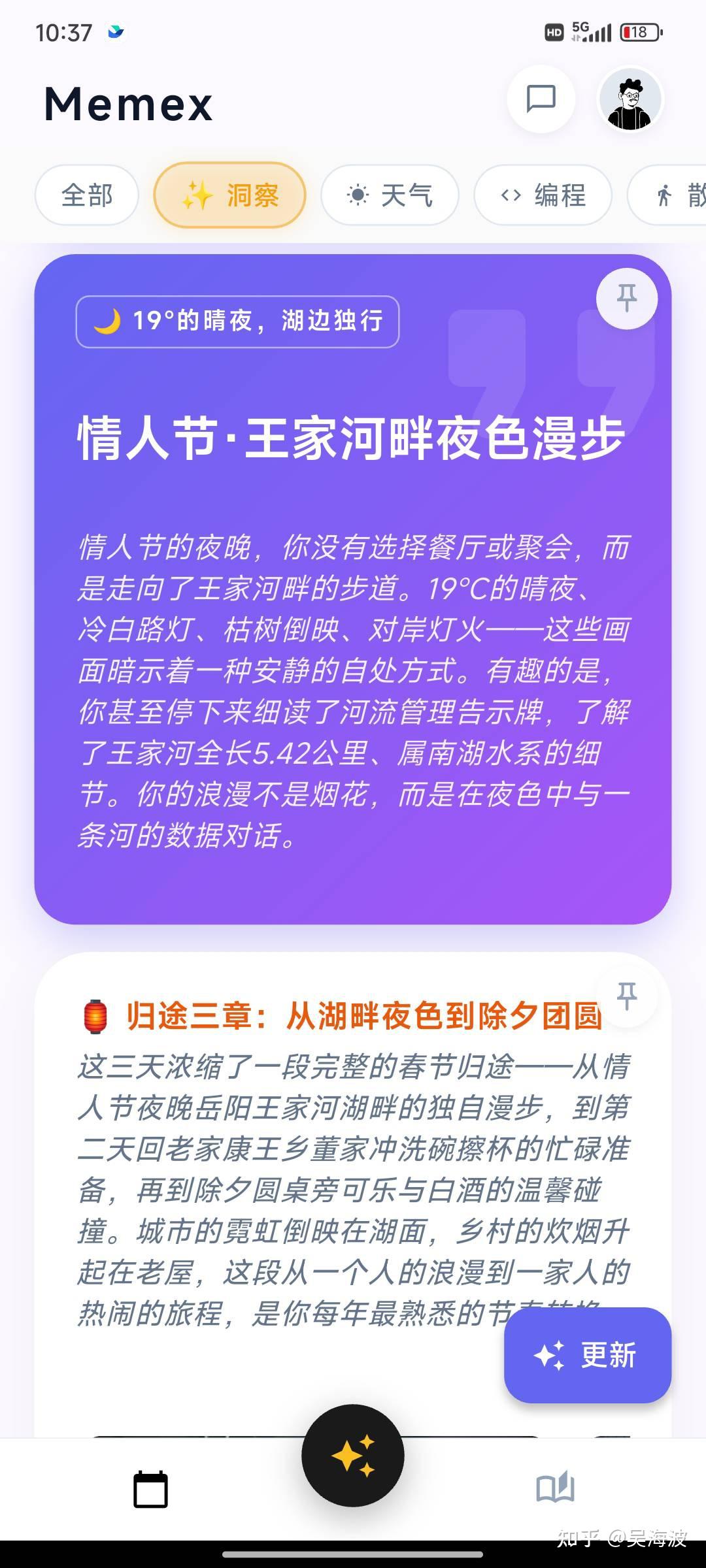
AI changes this for the first time. After you record something, the system can respond. It does not need to be deep every time. Often the user just needs a light, natural response that catches the moment.
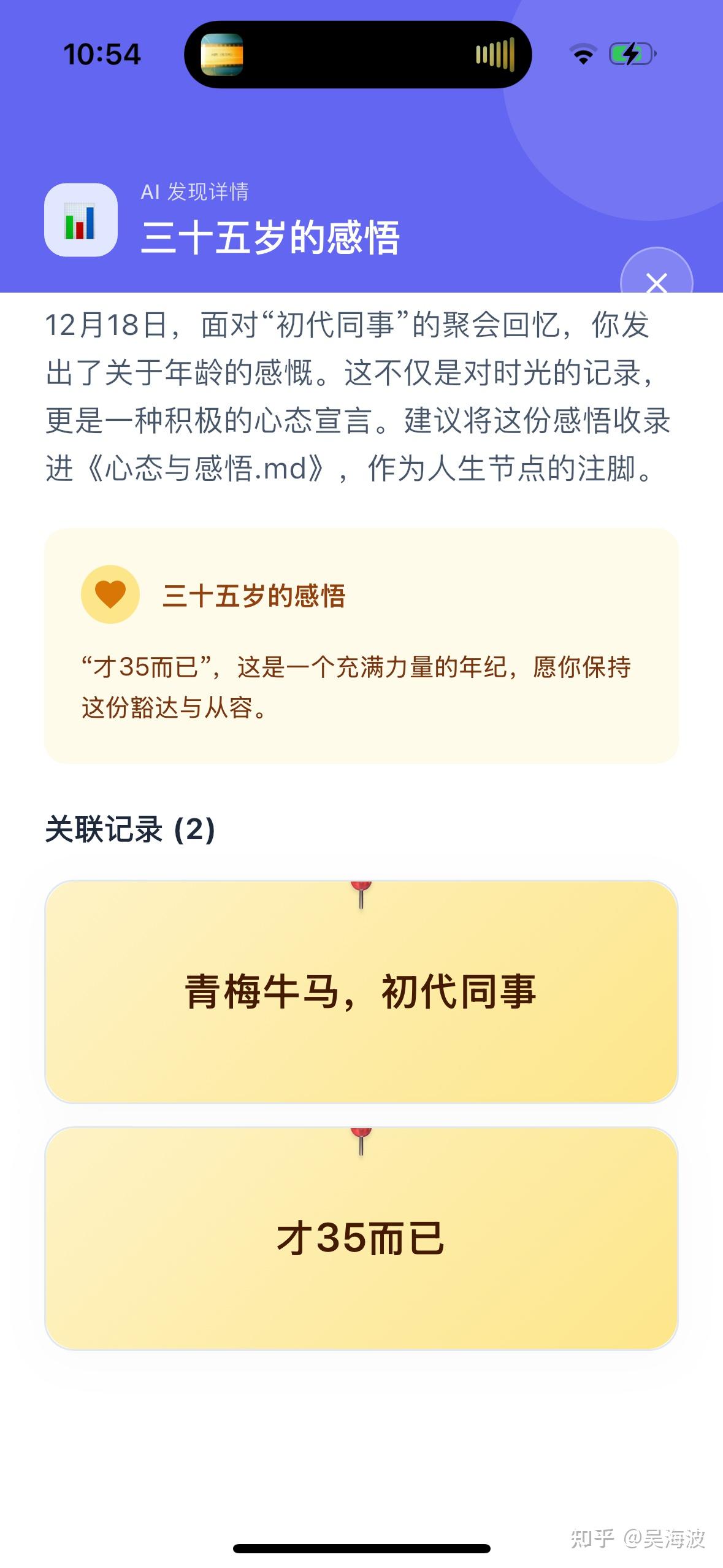
Over long-term use, connections begin to appear between fragments. Patterns you would not have noticed start to surface. At that point, recording is no longer just “I saved something.” It becomes: I am slowly understanding who I am through these fragments.
What Memex is trying to do
Memex is not a traditional diary app, and it is not simply an emotional-companion product. It is an attempt at a different kind of personal record: not just storing life, but helping you see yourself through it.
- Recording should be almost frictionless. Memex does not ask you to change your habits or write long entries every day. A sentence, a photo, a voice note: record the way you already record.
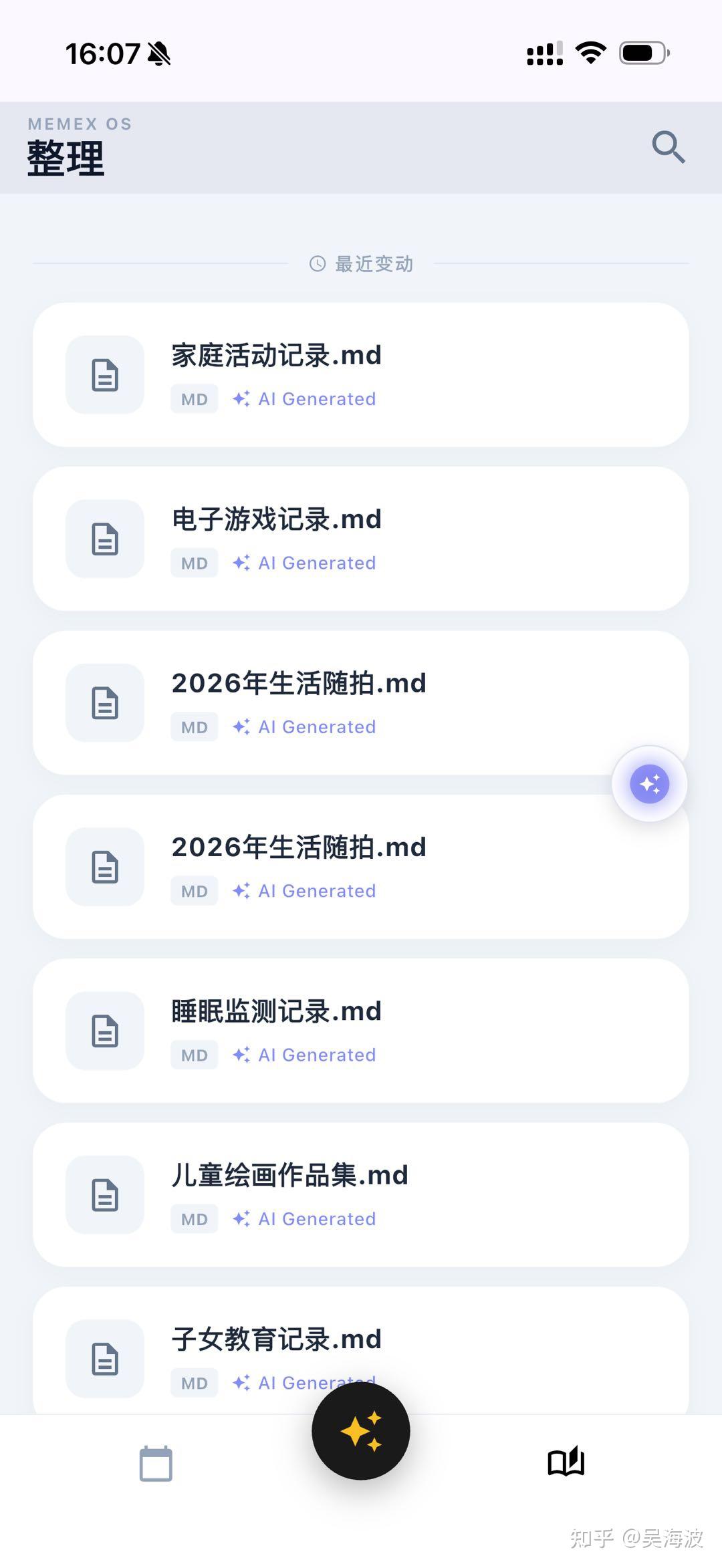
- AI should work in the background. Multiple agents can organize records, generate cards, extract insights, and connect memories without making the user do that labor.
- The response should feel real. Insights should not become reports, and companionship should not become marketing copy. The goal is that one day you look back and feel: this is what I was like.
Why open source matters here
Memex moved everyone who worked on it, but we also saw the difficulty clearly. Inside a commercial company, it is hard to maintain a product that is fundamentally about the person rather than traffic or monetization.
Model costs are high. Operating costs are high. Under growth and profit pressure, we could not simply promise that the original idea would remain intact forever.
There is also a trust problem. Because on-device models are not yet strong enough, Memex still has to call cloud models in some scenarios. We do not want to pretend that this problem has already been solved.
So we decided to open source it. The most sensitive data deserves the highest level of trust. A system that touches your emotions, relationships, vulnerability, and personal confusion should not rely only on one company's promise. It should be transparent, inspectable, and guarded by a community.